
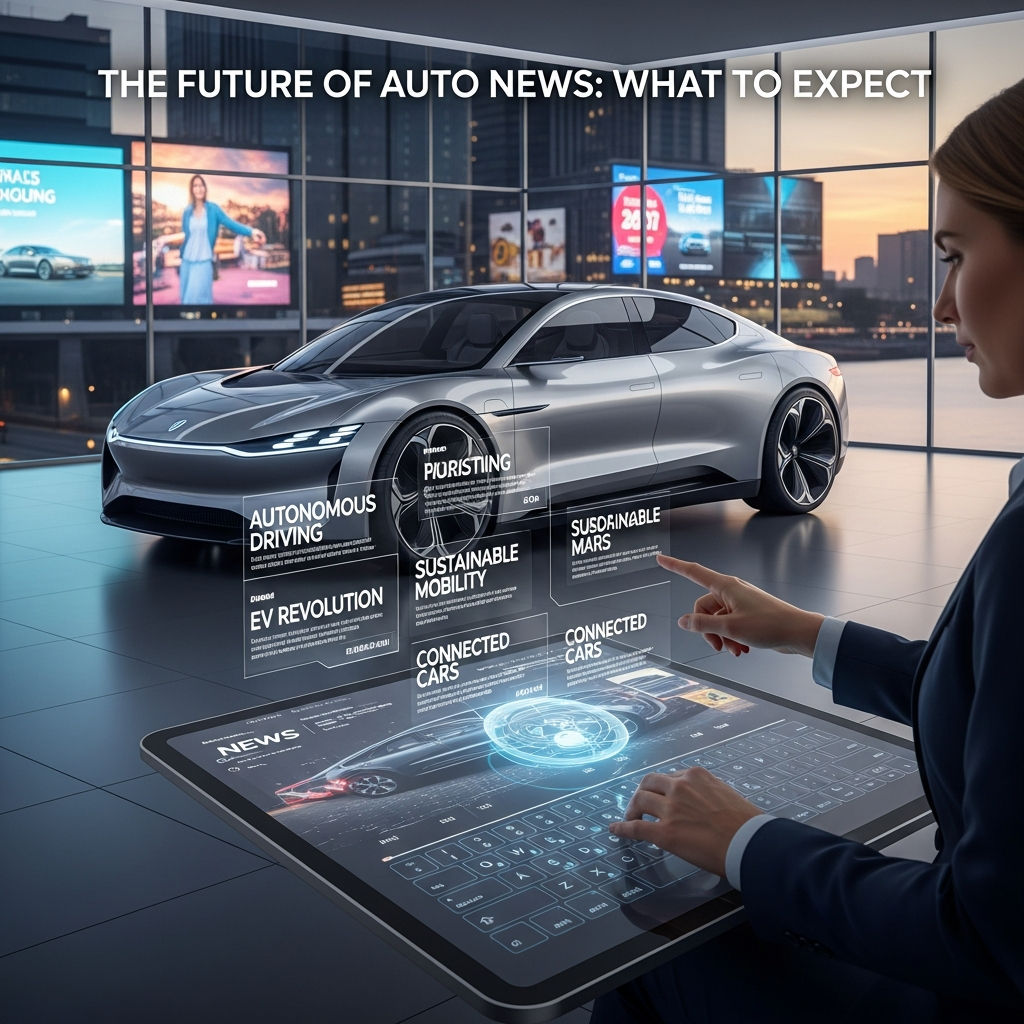
The Future of Auto News: Navigating a Shifting Digital Landscape
For decades, automotive news followed a predictable rhythm. Enthusiasts waited for the monthly arrival of glossy magazines to read about the latest engine specs, or tuned into scheduled television programs for a glimpse of the newest concept cars. Today, that landscape has been completely disrupted. The future of auto news is no longer just about reporting on vehicles; it is about navigating a complex intersection of technology, sustainability, and digital-first storytelling.
As we look toward the next decade, the way we consume information about cars is undergoing a radical transformation. From the integration of Artificial Intelligence (AI) to the shift in focus from “horsepower” to “software power,” the evolution of automotive journalism is a reflection of the industry it covers. Here is what to expect from the future of auto news.
1. The Rise of AI and Hyper-Personalized Content
One of the most significant shifts in the future of auto news is the role of Artificial Intelligence in content curation and creation. We are moving away from a “one size fits all” news feed toward a hyper-personalized experience.
Data-Driven Journalism
In the near future, news platforms will use AI to analyze your driving habits, location, and purchase intent to deliver news that matters specifically to you. If you are an urban commuter looking for an electric vehicle (EV), your news feed won’t be cluttered with heavy-duty truck reviews. Instead, you’ll receive real-time updates on charging infrastructure in your city and local rebates for EVs.
Automated Reporting
We are already seeing AI generate technical reports and price-drop alerts. Expect this to expand. Routine news—such as quarterly sales figures, safety recall notices, and spec-sheet comparisons—will likely be handled by AI, allowing human journalists to focus on deep-dive investigations, long-form storytelling, and nuanced vehicle testing.
2. From “Car Reviews” to “Mobility Analysis”
Historically, auto news was centered on the driving experience: zero-to-sixty times, handling, and exhaust notes. However, the industry is shifting from car ownership to “mobility as a service” (MaaS). Consequently, auto news must adapt.
- Software over Speed: Future reviews will focus less on engine displacement and more on the vehicle’s operating system. News outlets will critique User Interface (UI) and User Experience (UX) just as heavily as they once critiqued transmission shifts.
- Connectivity News: As cars become “smartphones on wheels,” news regarding Over-the-Air (OTA) updates, cybersecurity, and autonomous driving algorithms will take center stage.
- Integrated Transport: Auto news will increasingly cover multi-modal transport. This includes news on e-bikes, urban air mobility (VTOLs), and public transport integration, as major automakers transition into “mobility companies.”
3. The Sustainability and ESG Pivot
Environmental, Social, and Governance (ESG) criteria are becoming the backbone of the automotive industry. Auto news is no longer just about the product; it’s about the process. The future of auto news will place a heavy emphasis on sustainability reporting.
Expect to see more coverage regarding the lifecycle of a vehicle—from the ethics of lithium mining for batteries to the recyclability of interior materials. Automotive journalists will become part-time environmental scientists, scrutinizing “greenwashing” and providing consumers with transparent data on the carbon footprint of their next vehicle purchase.
4. Immersive Storytelling: VR, AR, and Video
Static images and 2D video are becoming relics of the past. The future of auto news is immersive. As high-speed 5G networks become the standard, the medium of delivery will shift toward Augmented Reality (AR) and Virtual Reality (VR).
Virtual Test Drives
Why wait for a car show to see a new model? Future auto news platforms will offer VR experiences that allow readers to “sit” inside a newly revealed cockpit from their own living room. You will be able to toggle interior colors and interact with the infotainment system before the car even hits the dealership floor.
Interactive AR Overlays
Imagine pointing your smartphone at a car on the street and receiving an instant overlay of its specs, recent news, and current market value. This type of interactive journalism will bridge the gap between digital content and the physical world, making auto news more utility-driven than ever before.
5. The Democratization of Auto Journalism
The gatekeepers of automotive news are changing. While legacy publications like MotorTrend and Car and Driver remain influential, the future belongs to independent creators and niche communities. Social media platforms like TikTok, YouTube, and even decentralized platforms are shifting the power dynamic.
- Influencer-Led Reviews: Consumers are looking for authenticity. Influencers who provide “unfiltered” takes on vehicle reliability and daily usability are often trusted more than traditional outlets that rely on manufacturer-sponsored press trips.
- Community-Sourced News: Platforms like Reddit and specialized forums are becoming primary news sources. When a mass defect or a hidden software feature is discovered, it often breaks in these communities before reaching mainstream news outlets.
- The Death of the “Press Release”: Companies are now bypassing news outlets to speak directly to consumers via live-streamed events and social media, forcing journalists to provide more value-add analysis rather than just regurgitating brand statements.
6. Real-Time Market Intelligence
The volatility of the car market in recent years has turned auto news into financial news. In the future, auto news will integrate real-time economic data. Readers will expect live updates on:
- Depreciation curves for specific models.
- Real-time dealer inventory levels.
- Fluctuating interest rates and financing deals.
- Energy costs (electricity vs. gasoline) updated daily.
This shift makes the auto journalist an advisor as much as a reporter, helping consumers navigate the high-stakes financial decision of vehicle acquisition in an era of rapid technological obsolescence.
7. Addressing the Ethics of Autonomy
As self-driving technology matures, auto news will take on a more philosophical and legal tone. We can expect a rise in “policy-heavy” automotive reporting. The future of auto news will include significant coverage of legislative changes, insurance liability shifts, and the ethical dilemmas of AI decision-making on the road.
Reporting will move beyond “how well the autopilot works” to “how the autopilot is regulated.” This will require auto newsrooms to hire experts in law and ethics to provide comprehensive coverage of the autonomous revolution.
Conclusion: A New Era for the Automotive Enthusiast
The future of auto news is fast, fragmented, and deeply integrated with technology. While some may miss the simplicity of a monthly car magazine, the new era offers unparalleled access to information. Whether it is through an AI-curated feed, a VR test drive, or a deep-dive into the sustainability of a solid-state battery, the consumer is now more empowered than ever.
For journalists and content creators, the challenge will be staying ahead of the curve. The industry is moving away from the “what” of cars and toward the “how” and “why.” In this brave new world, the most successful auto news outlets will be those that provide not just information, but context, transparency, and a vision for the future of human mobility.